What Is Translation in Biology and Why Does It Matter
- April 20, 2026· Article by Blake Carter
- Genetic Code
Understanding how living cells turn genetic information into working proteins is essential for grasping modern biology, medicine, and biotechnology. This process underpins everything from how our muscles move to how viruses hijack our cells. For students, researchers, and science communicators, getting clear on this concept is not only academically important but also crucial for explaining life sciences to broader audiences and for connecting biology with real-world applications.
Main Research
1. Translation Bridges DNA and Function
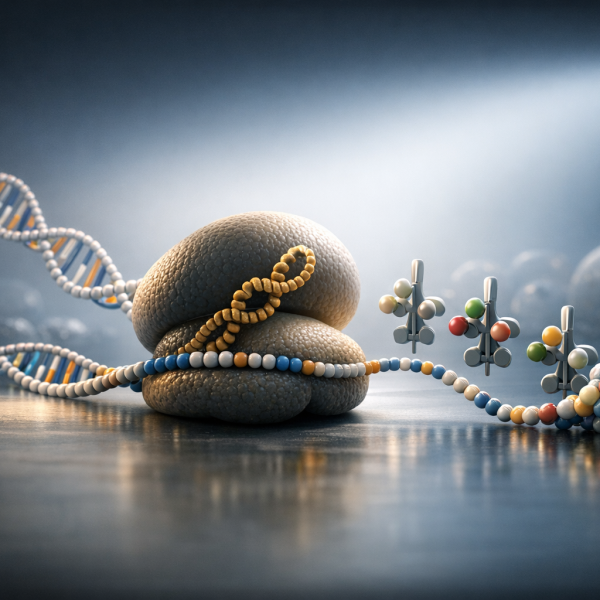
In every cell, DNA stores the instructions for building an organism, but DNA itself does not do the work. The actual workers inside cells are proteins, which carry out structural, enzymatic, and regulatory roles. The conversion from genetic code to protein happens in two major stages: transcription and translation. Transcription copies DNA information into messenger RNA (mRNA). Translation then reads the mRNA and assembles amino acids into a protein. Without this bridge, the information in DNA would remain unused, and life as we know it could not exist.
2. Ribosomes: The Cellular Protein Factories
Translation takes place on ribosomes, complex molecular machines found in all living cells. They bind to mRNA, read its sequence in three-letter units called codons, and match each codon with the correct amino acid using transfer RNA molecules. This process is remarkably precise. Even small errors in translation can lead to malfunctioning proteins that disrupt cellular function. Ribosomes work continuously, synthesizing thousands of proteins per minute in rapidly dividing cells, which makes them central to growth, repair, and metabolism.
3. Genetic Code as a Biological Language
The genetic code functions like a multilingual dictionary shared across nearly all forms of life. Each codon on the mRNA corresponds to a specific amino acid or a stop signal. This near-universal code allows scientists to express human genes in bacteria, plants, and animal cells. Understanding this shared language is also critical when specialized content must be accurately interpreted and shared across human languages. For example, life science companies working with Turkish partners often require an experienced English to Turkish translation agency to ensure that complex biological terminology and documentation are conveyed with the same precision the genetic code demands in the lab.
4. Why Translation Accuracy Matters to Health
Precise translation is vital for healthy cells. If the wrong amino acid is inserted into a protein, its shape and function can change, sometimes drastically. Certain genetic diseases stem from mutations that affect how an mRNA is read or how a protein is built. In other cases, toxins and some antibiotics specifically target the translation machinery of pathogens to stop them from making essential proteins. Understanding translation helps researchers design therapies that correct or exploit these mechanisms, from rare genetic disorder treatments to modern antibiotics.
5. Translation Underlies Growth, Repair, and Immunity
Every time tissue grows, heals after injury, or responds to infection, translation ramps up. Muscle growth after exercise, recovery from a wound, and the expansion of immune cells during an infection all require rapid protein synthesis. Immune cells must quickly produce antibodies, signaling molecules, and surface receptors, all of which depend on efficient translation. Even subtle changes in translation rates can influence aging, inflammation, and susceptibility to disease.
6. Viruses Hijack the Translation System
Viruses cannot reproduce on their own; they lack ribosomes and most of the machinery required for translation. Instead, they invade host cells and redirect the host’s translational apparatus to make viral proteins. Many viral strategies revolve around taking control of ribosomes, suppressing host protein synthesis, and prioritizing viral mRNAs. By understanding how viruses exploit translation, scientists can design antiviral drugs and vaccines that disrupt these steps and make it harder for viruses to spread or replicate efficiently.
What makes the biological process worth understanding is that the output is not a copy but a construction, assembled according to rules and vulnerable to small errors with large effects. Human interpreting behaves the same way, which is why the conditions around it matter so much. In healthcare that reasoning drove the shift to video remote interpreting, where being able to see the patient changes what the interpreter can accurately convey.
7. Translation Is Central to Biotechnology and Industry
Modern biotechnology relies heavily on engineered cells that translate foreign genes into commercially valuable proteins. Insulin, growth hormones, clotting factors, vaccines, and even industrial enzymes used in detergents are produced this way. Researchers insert carefully designed DNA into bacteria, yeast, or mammalian cells and depend on the host translation machinery to generate high-quality proteins. Optimizing translation efficiency in these systems can dramatically increase yields, reduce costs, and accelerate the development of new medical and industrial products.
8. Regulation of Translation Fine-Tunes Cellular Responses
Cells do not just control which genes are turned on; they also regulate how strongly and how quickly each mRNA is translated into protein. Under stress, such as heat shock or nutrient deprivation, cells often slow down general translation while selectively increasing production of stress-response proteins. This nuanced control helps maintain balance, prevents wasteful energy use, and allows rapid adaptation to changing environments. Misregulation of translation can contribute to cancer, neurodegenerative diseases, and metabolic disorders.
9. Evolution Leaves Its Mark on Translation
Comparative studies of translation systems across bacteria, archaea, and eukaryotes reveal how life has evolved over billions of years. Differences in ribosome structure, regulatory proteins, and codon usage biases reflect each lineage’s unique evolutionary history and ecological niche. These variations can be exploited in medicine, such as designing drugs that target bacterial ribosomes without affecting human ones, or in synthetic biology, where altered genetic codes are engineered to build novel proteins with new properties.
10. Translation Research Drives Future Therapies
Emerging fields like mRNA therapeutics and gene editing depend directly on our understanding of translation. Vaccines that use mRNA templates rely on human cells to translate these molecules into viral proteins that train the immune system. Researchers are also exploring ways to selectively enhance or suppress translation of specific mRNAs in cancer cells or neurons affected by degeneration. As this knowledge grows, it opens up new strategies for personalized medicine, regenerative therapies, and more targeted drugs.
Conclusion
Translation is far more than a textbook term; it is the core process that turns static genetic information into the dynamic proteins that sustain life. It shapes health, disease, growth, evolution, and biotechnology. By recognizing how this molecular system operates and how precisely it must function, we gain insight into everything from antibiotic design to advanced gene therapies. For anyone involved in life sciences, keeping a clear, accurate grasp of translation is fundamental to understanding both current research and the future of medicine and biotechnology.